

When we trace the origins of what many call “the perfect slice,” our journey lands squarely in the city that never sleeps. Here, thin-crust, hand-tossed dough, subtle bubbles and a fold-first-aim approach emerged not merely as a way to eat pizza but as a cultural symbol. It wasn’t just about toppings; it was an attitude wrapped in dough. The pace, the loud streets, the late-night delivery runs—all helped forge a pizza style built for speed, convenience and big flavour. And though rooted in one metropolis, this slice mentality planted seeds far beyond its local neighbourhoods.
Across continents, pizzaioli and chefs looked eastwards (or rather, upwards at the Manhattan skyline) and asked: how to replicate that crackled crust, that char-kissed edge, that sheer joy of a pizza eaten on the go? Soon, layers of global influence came into play—regional flavours, local cheeses, local ovens—but the blueprint remained: big slice, foldable, social, spontaneous. The result? A ripple effect across pizza menus worldwide, each site paying homage while adding its own twist. That ripple has now become a global wave.
The Anatomy of the New York-Style Slice
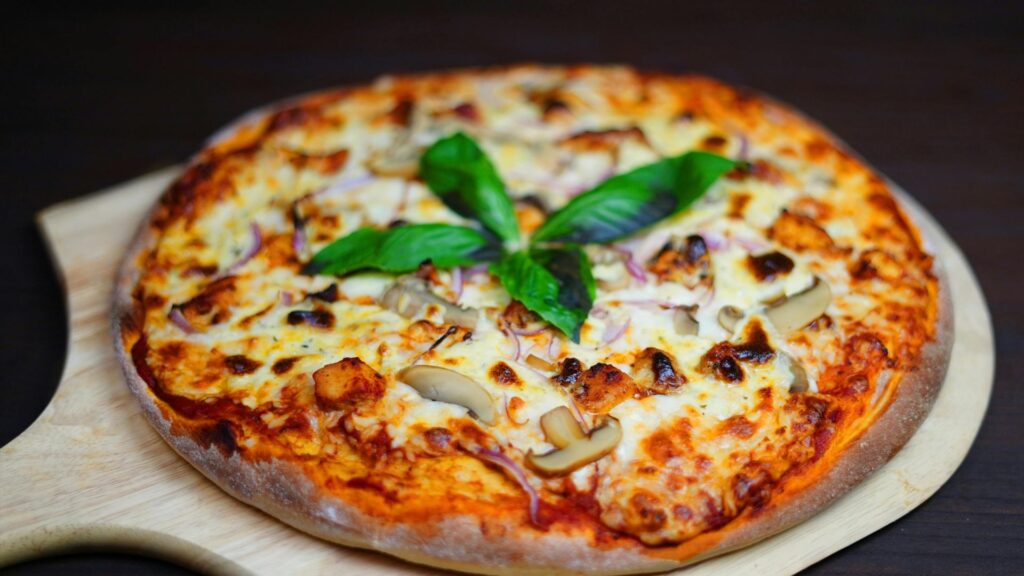
At the heart of this style is a dough that holds firm, yet bends—not floppy, not rigid: just right for folding in half and walking down the sidewalk. The crust isn’t ultra-thick like a deep-dish, nor wafer-thin like a cracker. It strikes a balance: chew, crisp, char. The sauce tends to stay underneath the cheese, avoiding sogginess; the toppings work with restraint to let the crust breathe; and the entire slice is engineered to be a handheld delight. This architectural design might seem simple, but it’s the result of decades of vendor and diner experimentation.
Globally, pizzerias wishing to evoke that experience study these details closely: oven temperatures hit upward of 500°F (sometimes more), flour blends matter, proofing times are tweaked, and the cheese-to-sauce ratio is calibrated. Every element contributes to the signature foldable experience. When international chefs replicate the model, they often retain the core structure but layer in flavor profiles native to their region: spicy chorizo in Spain, seafood in Asia, vegetarian twists in Australia. The backbone remains New York-style, the dressing is local.
How It Jumped Oceans and Borders
The migration of this slice has less to do with a formal global expansion plan and more with cultural osmosis. Tourists snatch a slice at a corner shop, return home, crave that shape and bite and prompt local chefs to recreate it. International chains and gourmet independents alike spotted the trend: hungry diners want that fold-and-go, iconic silhouette and shared visual of someone eating pizza on the sidewalk. Over time, the model internationalized: bookshops in Tokyo sell “NY-style pizza” as a concept, cafés in Milan advertise “New York pizza nights,” beachside bistros in Sydney serve half-slices for sunset. The language of the slice has outgrown its city origins.
And social media played its role. A steaming slice held aloft in front of a skyline, a cheesy pull posted on Instagram—that imagery spread the style faster than any print ad. Global chefs started to refer to “NY fold” or “big slice format” when talking menus. Suddenly, New York-style became shorthand for thin crust, large diameter, foldable slice—a style not locked to a borough but available worldwide.
Cultural Adaptations and Innovative Flavours
Even as the global pizza scene borrowed the New York blueprint, no two adaptations looked identical. In Japan, the crispness might edge toward wafer-thin but still carry the charred rim and foldable ease. In Brazil, toppings swirl with tropical fruits and smoked meats but the slice format remains. In South Africa, spicy peri-peri sauces meet classic cheese and crust, and still the fold remains. The core makes room for local identity. This flexibility has been essential. The universal appeal of the slice is partly its simplicity—yet through that simplicity it allows endless variation.
Chefs experiment: vegetarian New York-style with kale and artichoke, vegan versions with plant-based cheese, gluten-free crusts that mimic the chew, even dessert slices inspired by the technique. What remains constant is the homage to the original vibe: large slice, thin-ish crust, easy to eat. That continuity serves as a bridge between continents, letting diners worldwide recognise the style while discovering local twists.
The Social Side of the Slice
Eating a slice doesn’t always happen in formal settings. One of the keys to the global penetration of this style is its casual, communal nature. Street corners, late-night runs, sidewalk chatter—these are the theatres of the slice. And as the style spread, those social behaviours came along. Pizzerias overseas began offering “by-the-slice” servings, high tables, quick in-and-out service, nights where slices dominate the menu over whole pies. The style enabled pizza to become social fuel, not just a dining choice.
In many cities, pizza pickups in this style became part of the nightlife: bars with slices alongside cocktails, pizza trucks at outdoor events, jogging home with a slice in hand after theatre or sport. That’s how the New York slice vibe became global: it wasn’t just a recipe, it was a behaviour model—a way to eat across times of day and reasons for being.
Influence on Pizza Chains and Independent Shops
Large pizza chains didn’t ignore the shift. Many launched “New York-style” lines within their menus, changed crust formulations, increased slice sizes, emphasised thin crust and foldability. Independent shops likewise leaned into the aesthetic: big signage, wood-fired ovens, Brooklyn-themed décor, slice displays. The push wasn’t purely flavour; it was branding. The term “New York-style” became a marketing badge that signalled something crisper, larger, more authentic than standard chain fare.
But in doing so, the influence also brought competition and expectation. Diners began to know the difference; they asked for crust crispness, edge char, chew. That raised the bar globally. A pizza shop in another country might pitch “NY-style” and be held to the standard of texture, flavour, slice size. This ripple has forced improvement, creative adaptation, and even fusion—bringing the slice style into gourmet and artisanal domains.
Challenges of Authenticity and Localisation
With global spread comes questions: what counts as “authentic” New York-style? When a pizzeria in Asia uses locally milled flour, a domestically built oven, and soy-based cheese substitutes, can it still claim the label? Purists might say no; but the beauty of global cuisine is that adaptation is inevitable. What matters is tribute, not replication. Some shops openly describe their pizza as “NY-inspired,” acknowledging their location’s constraints and creative liberties. That transparency helps maintain trust with diners.
Another issue is oven technology. In New York, many original slice shops use coal-or-wood-fired ovens reaching high heat quickly, producing those crisp edges and blistered char spots. In other countries, fuel costs, regulations, and kitchen layout differ. So chefs adapt: using electric ovens, specialty stones, topping tweaks to replicate the effect. The end result may not be identical to the birthplace, but it can evoke a similar eating experience. That compromise is part of how the style becomes global while still rooted locally.
The Role of Media, Travel and Food Tourism
Travel blogs, foodie influencers, pizza-obsessed Instagram accounts have all amplified the New York‐style narrative. When someone documents a slice in Brooklyn and highlights its fold and edge, they inspire others. Travel to New York becomes a pilgrimage for slice lovers; coming home, they replicate what they loved. That cycle fuels global interest. Food tourism locales now often include “NY‐style pizza” as a local draw—“Come eat this slice in Tokyo” or “Sydney’s big slice scene” even without New York’s geography.
Mainstream media likewise spotlight “NY‐style pizza” as a category—articles, reviews, “where to get the best slice” lists. As a result, independent restaurants world‐wide tap into that terminology to reach those audiences. The phrase itself has become a genre marker. And that matters: the more a style becomes named and talked about, the more it spreads.
How Local Chefs Innovate While Staying True to the Slice DNA
Innovation doesn’t mean abandoning the core. Chefs keep the size large, the crust thin-ish and foldable, the eat-and-go vibe intact—but they layer in regionally inspired toppings, sauces, or serve the slice in unexpected moments (breakfast pizza anyone?). In Melbourne, for instance, you might find a New York-style slice topped with kangaroo jerky and bush tomato chutney. In Seoul, kimchi-infused sauce meets the thin crust fold. The result is variations that spark curiosity, yet underlyingly nod to the original.
Such innovation helps keep the style alive rather than stale. If the slice were rigidly defined, it might limit adoption. But by keeping the blueprint open to local taste, the style continues to evolve and spread. That might be the most valuable lesson from New York: pizza isn’t a monolith—it’s a format that can travel, adapt, and still feel familiar.
The Impact on Home Cooking and DIY Pizza Movements
With the rise of home ovens, outdoor pizza ovens, DIY kits and cooking shows, the New York slice style has also found its way into kitchens around the world. Hobbyists mimic high-heat based cooking, experiment with dough lengths, weigh toppings to avoid overload, aim for foldability. Online tutorials reference the “New York fold,” the “tossed edge,” the “slice size” as benchmarks. Thus the style influences not just restaurants but home cooks who want to replicate that experience.
This DIY trend strengthens the global presence of the style. Instead of simply eating out, people bring the aesthetic into their backyard. The result: regional ingredients but New York structure. Think of a mozzarella made from local milk but laid on a thin crust in Vancouver; or a slice topped with harissa and lamb in Cape Town but folded like Manhattan. The international home pizza community increasingly references the slice style as a model.
Why It Resonates and What Its Future Might Hold
So why has this style resonated so widely? There are a few reasons. It’s visually appealing—a large slice dripping cheese, fold in hand, bite after bite. It’s social—easy to share, easy to snap and post on social media. It’s flexible—large enough to satisfy hunger but often sold by the slice so approachable. And it’s cultural—a nod to a legendary city’s hustle and flavour. As for the future, expect continued global layering: more plant-based versions, hybrid crusts, fusion toppings, pop-up slice bars in unexpected cities. The form is strong enough to absorb change.
One emerging trend: “slice nights” in cities where the pizza has traditionally been pie-centric. Or late-night slice bars in cities where pizza is usually for dinner, not post-midnight. Another: the “gourmet slice” where toppings become chef-driven but the basic size and format remain. The fundamental lesson: when a style is robust yet adaptable, it travels far. And in this case, the slender foldable slice born in New York is now a global canvas for culinary creativity.
Conclusion
From the sodden sidewalks of a bustling borough to hidden cafés on distant continents, the journey of the New York-style slice is a testament to how simple food formats can reshape global eating habits. What began as a fast, foldable way to eat pizza in a busy city transformed into a worldwide template. Local chefs, home cooks and travellers alike embraced the structure—thin crust, large size, fold in hand—and layered on their own influences, turning an iconic slice into a universal language.
The global spread of this style proves that when a dish is both functional and flavour-forward, it will transcend its origin. Today you may find a slice inspired by the Big Apple in cities far removed from it, yet still invoking the same comfort, energy and communal vibe. Whether you’re stopping by for a slice, sharing a pie with friends, or experimenting in your own kitchen, the DNA of that original fold remains. If you’re ever in Scottsdale, AZ and craving such an experience, feel welcome to call (480) 687-1827 or visit 1645 Hayden Rd, Scottsdale AZ 85257 to sample the legacy firsthand at Night Owl Pizza & Drinks Scottsdale.