

Sinful beginnings with golden crust
There’s something almost ritualistic about the moment a fresh pizza emerges—thin crust bubbling, edges perfectly charred, the aroma of tomato sauce and melted cheese swirling in the air. At our chosen spot, the chef’s hand clearly guides each pie, layering with care so that every fold and bite carries intention. It is here where that first crunch at the edge and the subsequent melt on the tongue establish a pattern: flavors that awaken the memory, then linger, refusing to fade into the mundane. The nuances matter—the brightness of a vine-ripened tomato, a whisper of oregano and herbs, the way the cheese stretches as you lift the slice. These are not mere ingredients; they are the building blocks of something timeless.
In a dining room alive with laughter and clinks of glasses, you recognize that pizza is more than fast food—it’s the comfort of familiarity wrapped in newness. A place where you’ve been before, yet each visit feels fresh. It’s the crust and sauce and toppings telling a story that resonates: you feel it in your first bite and you carry it with you afterwards. That’s how flavors refuse to fade—they anchor themselves in your senses, demanding another visit, another slice, another moment.
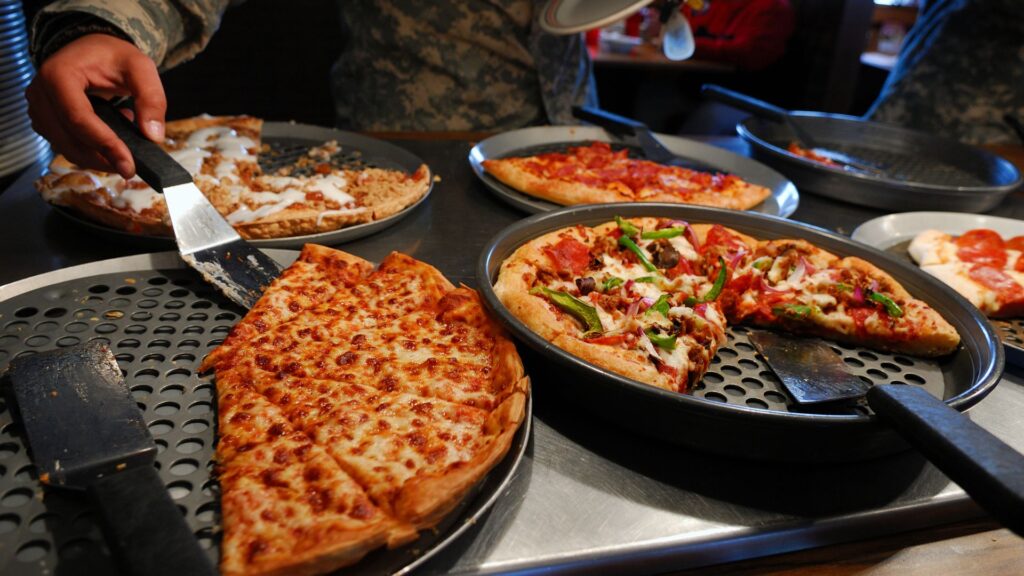
The harmony of classic and bold toppings
When you step into a kitchen that respects tradition while inviting whimsy, the result is a topping lineup that spans the familiar and the daring. Tomato-based pies anchored by mozzarella and pepperoni sit beside white-sauce versions layered with ricotta and spinach. There’s a meeting point between the safe and the adventurous: jalapeños dancing with pineapple, bacon cheekily sharing space with barbecue sauce. This kind of menu doesn’t play favorites—it treats each topping as a partner in a symphony, where sweet meets savory, crisp meets gooey, and spice meets cool.
It’s this interplay that keeps your taste buds engaged. One slice might pay homage to an old friend in the pepperoni slice you’ve enjoyed since childhood; the next might surprise you with a hint of truffle or an unexpected herb. And when you consciously taste that contrast, you realize how each element matters—the smoky bacon, the sweet burst of pineapple, the tang of sauce that cuts through cheese. That layered experience is what gives food its staying power. And when a kitchen is skilled enough to weave those elements together seamlessly, the result is flavor that sticks—not just because the topping is new, but because its relationship with the base, the crust, and the heat has been thoughtfully crafted.
Crust craftsmanship and texture finesse
In a world where pizza is often rushed, the element of crust becomes the unsung hero. A crust that’s too soft might collapse under toppings; too thick and it competes with the toppings. The sweet spot? A crust that offers resistance at first bite, then yields just enough, finishing with a whisper of chew and char. The kitchen we’re talking about nails that balance. Dough is handled thoughtfully, stretched, occasionally rested, and baked so that each bite delivers that coveted crack at the corner and a tender interior. The result is texture as flavor—the crisp edge offering a counterpoint to the creamy cheese, the slightly blistered bottom registering notes of fire and smoke.
When crust is given that much attention, it becomes more than a support—it becomes part of the narrative. You taste the flour, the fire, the time. And because the texture is right, the toppings can shine rather than be swallowed. That careful crust craftsmanship is what lets pizza endure in memory long after the meal. You remember not just the pepperoni or the cheese, but the way the crust spoke beneath it all. It’s the rhythm of that underlying base that carries the rest of the pie, and when it’s done well, the flavors never fade—they resonate every time you think of the slice.
Sauce secrets and layered complexity
Behind every memorable pizza lies a sauce that does more than just ‘hold things together.’ It should be bright yet balanced, ripe yet subtle, cut through with acid but smoothed out with herbs. When executed right the sauce becomes the emotional center of the slice. In this kitchen you’ll find that each pie’s sauce is tuned—not generic, but nuanced. A hint of garlic, a touch of basil, a sly undercurrent of chili or smoke. And when it meets the cheese, the toppings, the crust—you get a triumphant chord rather than a collection of isolated flavors.
This layered complexity means the sauce evolves as you eat it. The first mouthful might greet you with sweet tomato, the next edge a whisper of wood fire, then herbaceous lift, then spice creeping in. There’s motion, there’s surprise, and that keeps the senses alive. Because the sauce is doing work, the flavors don’t flatten out—they continue to develop. That’s how crafted sauces help flavors endure: by offering more than one moment of pleasure, by engaging you across the slice rather than delivering a single hit. In doing so, the pizza doesn’t just taste good—it stays with you, in taste and memory.
The role of cheese interplay and melt dynamics
Few things are as satisfying as a well-melted pie where cheese is more than a topping—it’s an experience. You look for that golden-tinged edge, gentle blistering, strings of mozzarella stretching as you lift the slice, and that first molten bite on your tongue. The kitchen at this spot understands that interplay—all cheeses are treated not just as an ingredient but as a partner. Mozzarella harmonizes with provolone perhaps, ricotta might appear on white pies, and a sprinkle of parmesan whispers significance.
This interplay matters because taste isn’t static—it’s dynamic. The melt dynamics mean texture and temperature play a role: the cool ricotta meeting hot crust, the molten mozzarella gleaming, the semi-melted parmesan adding crunch and tang. Each bite is a variation. When cheese is handled well, you don’t just taste it—you feel it in texture. And that sensation lingers. The memory of that melt, that stretch, that moment where cheese meets sauce and crust—this is what keeps flavors alive. Because when interplay is present, pizza becomes a moment, rather than just an order.
Smash burgers and pizza synergy
While pizza remains the headline act, introducing smash burgers into the menu offers more than variety—it deepens the theme of flavor that endures. A well-constructed smash burger brings crispy edges, juicy center, salt and char, all nestled in a soft bun. And when served alongside pizza, you get a kind of synergy: the burger complements the pie, offering a different texture, a different rhythm, a second anchor of delight. In this restaurant you’ll see both pizzas and smash burgers getting equal care—meaning flavor continuity across plates.
The synergy matters because pizza becomes part of a broader culinary moment. You’re not just eating one thing—you’re immersed in a space where checkable favorites and creative twists live side by side. So while you savor that pizza slice with crust and sauce and toppings, you might glance over at a burger and appreciate the layers: char, cheddar, pickles, sauce. That broadened experience means your taste memory doesn’t just fixate on the pizza—it associates with the whole meal. And because that meal is robust and varied, flavor endurance is baked in. You remember the place, the feeling, the menu. That context enriches your memory of the pie, making it last.
The beverage pairing and ambient vibe
Food rarely stands alone—it exists in an environment. And this restaurant clearly acknowledges that with a bar and beverages menu designed to accompany the pie and the plate. Craft cocktails, beer selections, playful combinations—these aren’t afterthoughts. They’re calibrated to elevate the experience, so that each slice and burger gets a sidekick: a sip that brightens tomato, that cuts cheese, that refreshes between bites. The ambiance is equally important. You’ll find arcade games, pinball machines, a patio with lights and misters—environments that invite linger. When you stay longer, you taste more deeply; you observe small details; the setting becomes part of your memory.
This matters because flavors that persist are anchored in experience. It’s not just what you ate—it’s where you ate it, how you felt in that moment, the sound of the glass, the glow of the patio lights. Pairing a slice with a craft cocktail magnifies the taste; playing a few rounds at a pinball machine extends the timeframe; sitting in the patio under string‐lights at dusk opens a sensory context. By the time you leave, you’ve done more than eat—you’ve inhabited a place. That lived‐in, experiential layer makes the flavor stick longer; the pie retains resonance because your memory is rich.
Late-night hunger and perpetual appeal
One of the most reliable ways to create a flavor that never fades is by showing up when hunger demands it. This spot understands the late-night game: the kitchen stays open late, the bar remains lively, the vibe shifts into relaxed and fun rather than frantic. That means when you arrive after the day’s bustle, you’re receptive—your senses are sharpened, your hunger gives you space to appreciate texture and flavor. A slice at midnight becomes more than food—it becomes a reward. This timing amplifies taste and makes it memorable.
With pizza by the slice, smash burgers, late hours, and a welcoming environment, the restaurant positions itself as the place you return to when the day ends. That consistency matters. Because if you know you can rely on good flavors, late night turns into a ritual and flavor becomes a habit. They aren’t just feeding you—they’re providing a safe harbor for hunger, for friends, for conversations. And that repeated return builds memory. Every wedge pulled at 11 p.m. or midnight carries an emotional weight. When food meets need at the right moment, the flavor embeds itself in your taste archive.
Community roots and local favorite comfort
When a restaurant becomes part of its neighborhood’s rhythm, that sense of belonging enhances flavor. The staff knows you, the patio welcomes you, the bar invites your group. That context of comfort and familiarity boosts the experience of every bite.
Flavors never fade when connected to place. When you think of a spot and recall the hum of conversation, the clink of glasses, the warmth of a server greeting you, you recall the flavor too. The consistency of quality—savory pizzas, juicy burgers, craft cocktails, welcoming space—builds trust. With trust comes emotional attachment. And when you’re emotionally attached to a place, flavors deepen. They don’t just go away. They linger, waiting for your next return.
Innovation that honors nostalgic roots
The final piece of the flavor puzzle is this: give people what they know but also surprise them. The next visit may introduce you to a new slice topping, a special drink, or an arcade challenge—but you still return to the familiarity of quality and environment.
When innovation honors roots, flavor resistance to fading is built in. You recognize the sign, you know the feel, and you trust the menu—but you also anticipate discovery. That tension—between comfort and surprise—is where enduring flavors live. Because each visit adds a layer: yes I know this place, yes I love their pepperoni slice, yes I’m excited to try the new white-pie variant. That layering of memory makes the food sticky in your mind.
Conclusion
In the world of pizza and bar food, the true prescription for flavors that never fade lies in the alchemy of fundamentals plus personality—crust that crunches, sauce that deepens, cheeses that melt with purpose, toppings that intrigue, and a setting that welcomes and entertains. By leaning into each of these elements the restaurant creates more than meals—it creates moments. Moments you remember, that you return to, that you carry beyond the table.
If you happen to be in Scottsdale AZ and seeking exactly that kind of experience then visit Night Owl Pizza & Drinks Scottsdale at 1645 Hayden Rd, Scottsdale, AZ 85257. You can reach them at (480) 687-1827 or inquire info@nightowlaz.com for more.